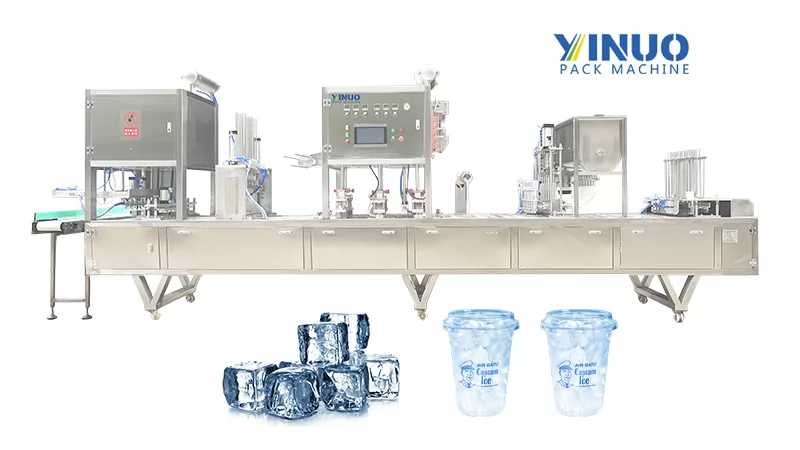
The linear-type coffee powder aluminum foil box filling and sealing machine is an automated equipment specifically designed for small-scale, high-precision, and high-efficiency packaging. It adopts a linear assembly line layout, sequentially completing the processes of aluminum foil tray feeding, quantitative filling, sealing (capping or heat sealing), and output. Its core features include a compact structure, intuitive operation, and flexible product changeover, making it ideal for small to medium-sized batch and multi-product production.
Main Structure and Working Principle
Working Process: Automatic aluminum foil tray dispensing → Screw quantitative filling → Film placement → Sealing (capping/heat sealing) → Finished product output.
Frame and Transmission System:
Linear Layout: All workstations are arranged in a straight line, ensuring a clear material flow and easy observation and maintenance.
Conveyor System: Typically uses a synchronous belt or chain driven by a servo motor, combined with precision-made fixtures or slots, to ensure accurate positioning and stable, tilt-free transfer of the aluminum foil trays during the process.
Core Filling System (Key Components):
Filling Method: Primarily uses screw metering filling, which is an ideal choice for powdered and granular materials such as coffee powder.
Principle: A servo motor drives a precision screw to rotate, pushing the material out of the hopper. The volume of material dispensed per rotation is fixed, and the filling amount is precisely controlled by controlling the number of rotations or rotation time of the screw.
Advantages: High accuracy (within ±1%), high speed, strong adaptability to free-flowing coffee powder, and less dust generation.
Multi-station Design: Linear equipment is usually equipped with 2-6 filling heads, performing filling simultaneously to improve production efficiency.
Sealing System:
Capping Type: If using pre-made plastic or aluminum lids with easy-tear foil film, the equipment uses a precision pressing head to press the lid onto the aluminum foil tray, possibly with ultrasonic welding or a compression sealing ring.
Heat Sealing Station: A heated sealing mold is used to heat-seal the covering film to the opening of the aluminum foil tray at a certain temperature, pressure, and time. This is the most common and cost-effective method.
Control System:
Core: Uses a PLC (Programmable Logic Controller) and a touchscreen human-machine interface.
Functions: Setting and storing parameters for different products (such as filling weight, screw speed, heat sealing temperature, etc.), monitoring production speed, production counting, and fault alarms (such as missing trays, missing film, abnormal temperature, etc.).