Choosing the right jelly filling and sealing machine directly affects your production uptime, packaging consistency, and long-term maintenance costs. Whether you're packaging fruit jelly, pudding, yogurt-based desserts, or fruit-pulp jelly, selecting equipment that seamlessly integrates cup feeding, filling, sealing, coding, and discharge into one automated process is vital. This complete guide breaks down how jelly filling and sealing machines work, available configurations, key technical specifications, and what to evaluate before you request a quote.
A jelly filling and sealing machine is specialized packaging equipment designed to dispense a controlled quantity of jelly or similar food products into containers and seal those containers with a suitable film or lid. Depending on the machine configuration, the production process can combine automatic cup feeding, product filling, film feeding, heat sealing, date coding, cutting, and finished-product discharge into one unified system.
These machines are commonly used for a wide range of products, including:
The main advantage of combining filling and sealing in one machine is process consistency. Instead of manually filling and sealing individual containers, an automated system coordinates container positioning, filling volume, sealing pressure, and production timing—helping food manufacturers reduce manual labor while maintaining strict portion control and package quality. If you want to explore broader automated packaging options, check out our comprehensive Jelly Filling and Sealing Machine showcase and our full range of Filling and Sealing Machines.
Although structural designs vary, an automatic jelly packaging line generally follows a sequence of precision stages:
Empty cups are supplied to the machine via a mechanical cup denester or feeding system. The cups are positioned accurately in transport molds before filling to ensure that each container aligns perfectly with the filling nozzle. Proper positioning is critical; even a minor displacement can disrupt filling accuracy or compromise the seal edge.
The jelly product is stored in a jacketed or standard hopper and transferred into containers through a precision dosing mechanism. Depending on formulation and viscosity, piston, pump, gravity, or volumetric filling methods are deployed. Because factors like product temperature, jelly viscosity, and suspended fruit particles directly impact flowability, manufacturers should always test equipment using their exact product formulation.
After filling, roll-fed sealing film or pre-cut lid foils are positioned over the cups. Sensors maintain proper film tension and optical alignment so the sealing area is completely covered without material waste.
The heat-sealing station applies controlled temperature and pneumatic or mechanical pressure to bond the film to the cup rim. Sealing temperature, pressure, and dwell time must be precisely calibrated to the specific film and cup materials to prevent weak seals, leakage, or difficult opening.
Integrated ribbon, inkjet, or laser coders print batch numbers and expiration dates onto the film. Finished cups are then trimmed, released from the transport molds, and moved to discharge conveyors. To see these steps integrated into a single continuous workflow, view our Automatic Cup Filling and Sealing Machine options.
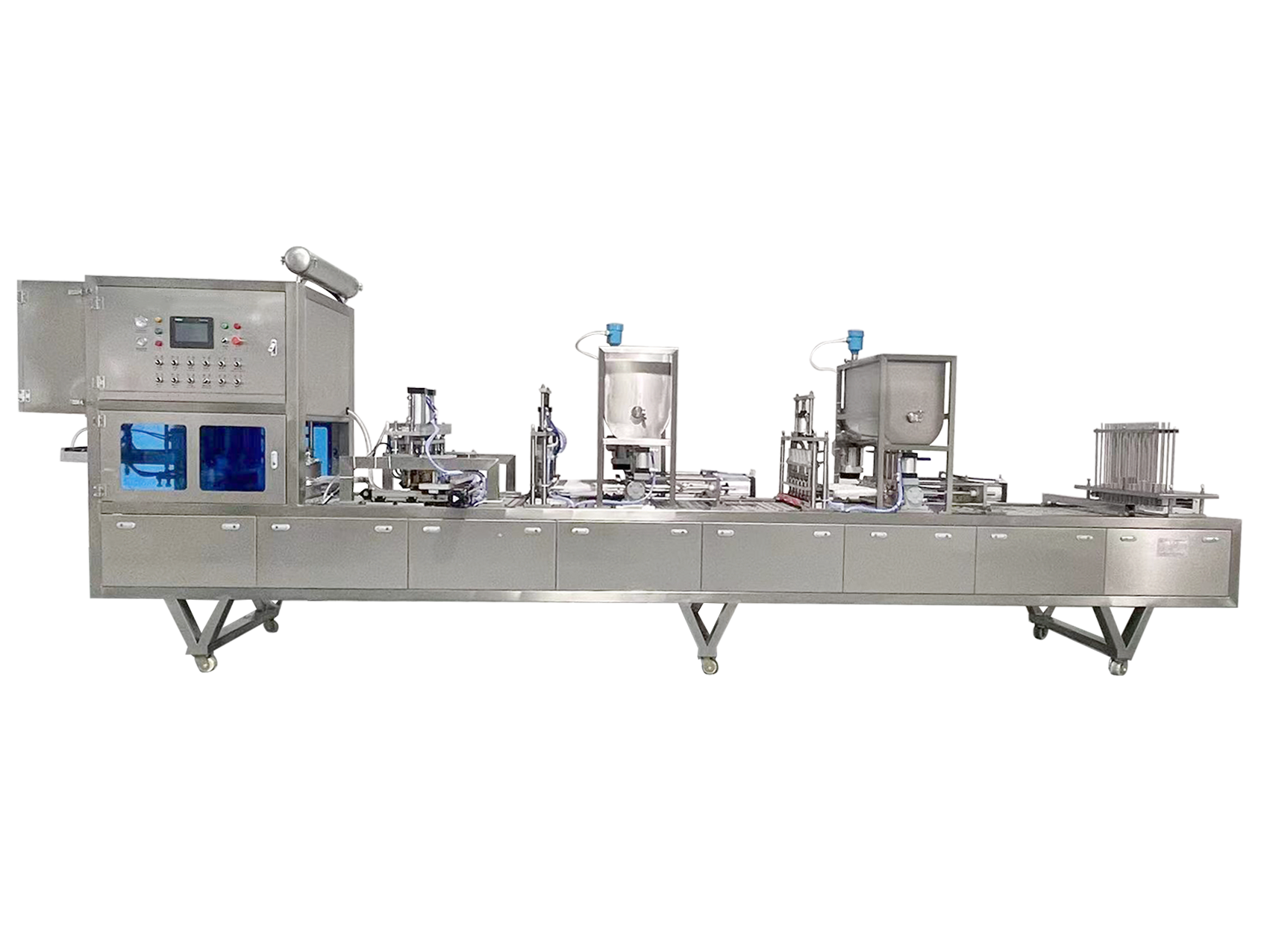
Jelly filling and sealing machines are categorized by automation level, structural layout, and filling mechanism:
Semi-automatic machines suit smaller production runs, laboratory testing, or startup facilities. They require manual cup loading or film placement but feature lower initial capital costs. Fully automatic machines integrate container feeding, multi-head filling, heat sealing, film trimming, and discharge into a continuous line designed for high-volume manufacturing.
Linear machines transport containers in a straight path across multi-lane configurations, offering high scalability and easy integration with upstream or downstream conveyors. Rotary machines arrange operations around a compact rotating carousel, making them ideal for facilities with limited floor space requiring medium-to-high throughput.
The filling mechanism must match your product's rheology. Piston fillers deliver high volumetric accuracy for thick or gel-like substances. Pump-driven systems handle varying viscosities and delicate solids, while gravity fillers work best for thin, free-flowing liquids. Review our modular Filling and Sealing Equipment to compare configurations.
Container compatibility is a foundational specification. Machines can be tailored to various cup geometries, materials, and product types:
Rigid plastic cups (PP, PET, PS) and paperboard containers are standard for single-serve jellies. Molds must be machined to match exact cup brim diameters and shoulder depths. If you require specialized multi-lane machinery, explore our targeted Jelly Cup Filling Machine setups.
Products containing real fruit pieces or coconut gel (nata de coco) require specialized hopper agitators and non-shearing rotary valves. These additions prevent particle clogging and ensure even fruit distribution across all cups.
Evaluating machines solely on maximum mechanical speed can lead to operational bottlenecks. Compare parameters that directly impact real-world efficiency and maintenance costs:
| Specification | Why It Matters |
| Production speed | Determines actual hourly output and line balancing capability |
| Filling volume | Ensures precise product dosing across various cup SKUs |
| Filling accuracy | Minimizes expensive product giveaway and underfill non-compliance |
| Cup diameter and height | Dictates transport mold tooling and denester mechanical range |
| Product viscosity | Determines whether piston, lobe pump, or gravity dosing is needed |
| Sealing temperature | Ensures hermetic seal strength without burning packaging film |
| Film type | Dictates heat-seal jaw design for laminated, foil, or plastic films |
| Changeover time | Affects downtime when switching between multiple product lines |
| Machine material | Stainless steel (SUS304/SUS316) ensures sanitary washdown durability |
| Power and air consumption | Determines utility infrastructure and ongoing operating cost |
Rated speed reflects ideal mechanical operation. Net yield depends on product viscosity, film roll changes, cleaning cycles, and overall equipment effectiveness (OEE). Always request factory test data using your specific packaging media and product formulations. For tailored engineering guidance, consult our team on Customized Filling and Sealing Solutions.
Selecting the proper machinery requires aligning hardware capabilities with long-term commercial goals:
Maximizing line efficiency requires maintaining steady operating conditions. Keep product hoppers at a constant temperature and head pressure to stabilize filling volume. Inspect cutoff nozzles routinely to stop stringing or dripping onto cup rims, which can cause seal failures. Implement structured preventive maintenance schedules for seal gaskets, cutting blades, and vacuum cups.
When operational issues occur, use this guide to identify and resolve root causes quickly:
| Problem | Possible Cause | What to Check |
|---|---|---|
| Uneven filling | Viscosity fluctuations or improper stroke adjustments | Check product temperature, hopper head pressure, and piston seal wear |
| Jelly dripping | Worn nozzle seals or incorrect shut-off timing | Inspect nozzle O-rings, check vacuum suck-back settings, and clean nozzles |
| Weak sealing | Insufficient heat, inadequate pressure, or short dwell time | Verify heater cartridge output, pneumatic cylinder pressure, and sealing time |
| Film misalignment | Uneven film roll tension or dirty tracking sensors | Calibrate photo-eye sensors, inspect tension brakes, and realign guide rolls |
| Cup positioning errors | Denester alignment faults or worn transport chain pockets | Adjust denester air knives, check mold pocket sizing, and clean index drives |
| Excessive product waste | Overfilling, splash during index, or seal-area contamination | Fine-tune fill profiles, adjust index acceleration, and fix nozzle drips |
A complete, high-efficiency packaging line relies on several integrated auxiliary units:
Machine pricing depends on automation degree, lane count, build materials, and integrated options. Entry-level single-lane units offer an economical path for smaller operations, whereas multi-lane high-speed linear systems with CIP, gas flushing, and automated case packing require larger investments. To receive an accurate equipment estimate tailored to your budget, submit your product specifications on our Request a Customized Solution page.
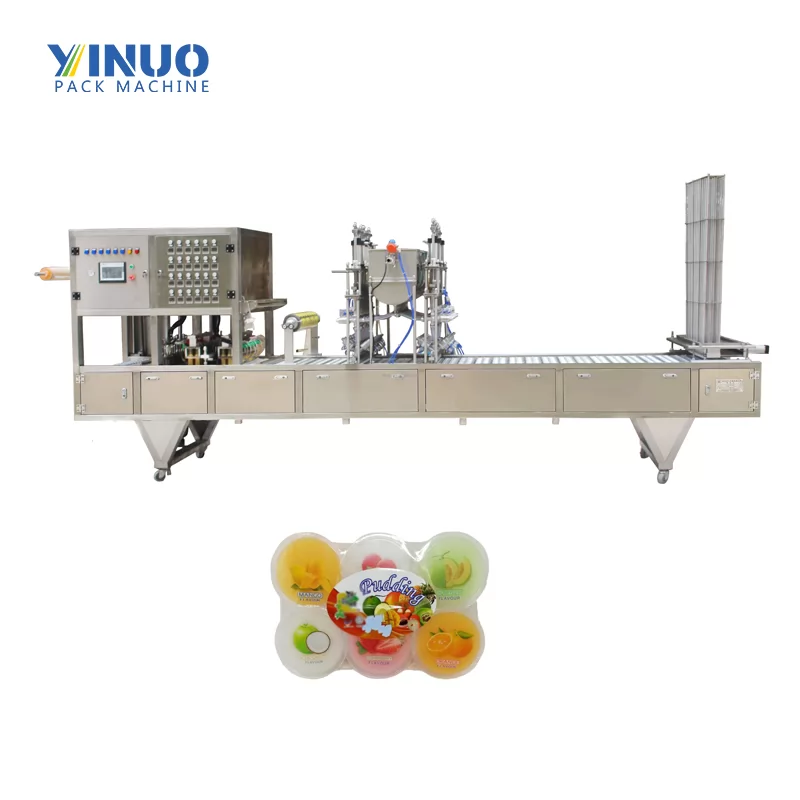
| Headquarters | Yangluo Development Zone, Xinzhou District, Wuhan, Hubei, China |
| Core Expertise | Turnkey design and manufacturing of cup filling, heat sealing, and lidding machines tailored for jelly, pudding, dairy, sauces, and instant foods |
| Production Capabilities | 10,000-square-meter modern facility equipped with high-precision CNC machining, ISO9001 quality system, and international CE certification |
| Global Service | Comprehensive engineering support from custom mold design and factory acceptance testing (FAT) to overseas installation and spare parts distribution |
Selecting Yijianuo Machinery means partnering with an experienced equipment builder dedicated to custom-engineered packaging solutions. Whether you need multi-lane filling for fruit-pulp jellies or high-speed rotary cup sealing, our machines deliver precise portioning, airtight heat seals, and long-term durability. We test every line using your actual cup samples and liquid formulations before delivery to guarantee seamless startup. Discover our main Jelly Filling and Sealing Machine lines, view our complete Filling and Sealing Machines catalog, or Contact Yijianuo directly to discuss your project requirements.
Request a QuoteWhat is a jelly filling and sealing machine?
A jelly filling and sealing machine automatically dispenses precise amounts of jelly into pre-formed plastic or paper cups, applies heat-seal film or pre-cut lids, and outputs packaged products ready for retail distribution.
What types of jelly can the machine fill?
Depending on the dosing system, these machines handle clear fruit jellies, gelatin desserts, puddings, konjac jellies, and recipes containing real fruit pulp or suspended gel cubes.
Can one machine handle different cup sizes?
Yes. By installing quick-change transport molds and adjusting cup denesting mechanisms, a single machine can run multiple cup diameters and fill heights.
What filling system is suitable for thick jelly?
High-viscosity jellies and particulate recipes respond best to servo-driven piston fillers or positive-displacement rotary lobe pumps equipped with jacketed heating hoppers.
What type of film can be used for jelly cup sealing?
Machines accommodate laminated roll films (e.g., PET/AL/CPP, PP films) or die-cut aluminum foil lids, depending on the barrier requirements and rim materials of your cups.
How fast can a jelly filling and sealing machine run?
Speeds range from 1,500 cups per hour on compact rotary machines up to over 15,000 cups per hour on multi-lane linear automated lines.
How can I choose the right machine for my production line?
Analyze your target hourly output, cup geometry, jelly viscosity, film type, and available floor space. Providing product samples to your machine builder ensures the optimal configuration.
Investing in the right jelly filling and sealing machine requires evaluating total packaging performance—from volumetric dosing accuracy and seal integrity to changeover flexibility and sanitary maintenance. Partnering with an experienced manufacturer ensures your equipment matches your operational goals and scales smoothly as your product line grows.
Ready to optimize your packaging line? Contact Yijianuo / Request a Quote today to consult with our engineering team and request a custom machinery proposal.
Your Name*
Your Email*


*We respect your confidentiality and all information are protected.