On the busy shelves of convenience stores, a cup of creamy yogurt, a tray of fresh juice, or a bowl of ready-to-eat dessert – these beverages packaged in cups, bowls, and trays have become an indispensable part of modern consumer life. The reason these products can reach consumers safely, hygienically, and conveniently lies behind a critical piece of equipment – the cup/bowl/tray filling and sealing machine.
As a vital component of food and beverage packaging machinery, the cup/bowl/tray filling-sealing machine is an automated packaging device designed to fill liquid, semi-liquid, or particulate products into pre-formed cups, bowls, or trays, and then seal them via heat-sealing, film lidding, or capping – ensuring hygienic, safe, metered, and traceable packaging. With the upgrading of consumption patterns, the rise of new-style tea drinks, and the growing demand for single-serve portions, this equipment has become increasingly important in the beverage industry, evolving from a simple production tool into a core asset that determines product quality and brand competitiveness.
The prosperity of the cup/bowl/tray filling-sealing machine market is primarily driven by the continued expansion of downstream consumer demand. In recent years, the rapid growth of fast-moving consumer goods such as yogurt, desserts, jellies, new-style teas, and functional beverages has created rigid demand for automated, high-efficiency filling and sealing equipment. At the same time, consumption scenarios have become increasingly diversified – from family breakfasts to on-the-go snacks, from business meetings to campus dining – and cup/bowl/tray packaging is widely used across dairy products, fruit and vegetable juices, teas, coffees, plant-based beverages, and functional drinks, thanks to its portability, ready-to-eat convenience, and excellent shelf display appeal.
In terms of market size, this segment has shown steady growth. According to market research reports, the global plastic cup forming, filling, and sealing machine market was valued at approximately USD 574 million in 2024 and is expected to reach USD 724 million by 2031, representing a compound annual growth rate (CAGR) of about 3.4%. Other data indicate that the global cup filling and sealing machine market was valued at about USD 1.64 billion in 2025 and is projected to grow to USD 2.57 billion by 2034, with a CAGR of 5.1%. In 2025, global production of cup/tray filling-sealing machines reached 197,000 units, with sales revenue of USD 887 million, and it is expected to reach USD 1.093 billion by 2032. The Chinese market is also growing rapidly: in 2025, the market for in-line dairy and beverage filling-sealing equipment reached RMB 643 million.
Market drivers include accelerated urbanisation, the growth of e commerce, and increasing consumer preference for packaged ready-to-eat products. Europe and North America are mature markets with high automation levels, while the Asia Pacific region – especially China and India – is expanding rapidly, benefiting from sustained growth in dairy, dessert, and packaged beverage consumption.
3.1 Cup-based Beverages: The Most Widespread Application Format
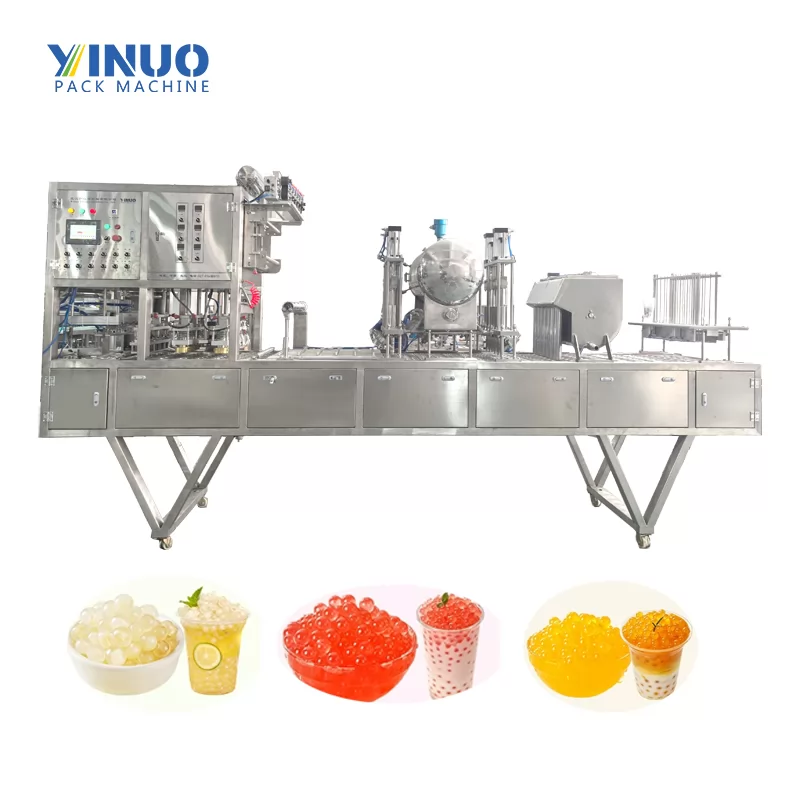
Cup packaging represents the most mature and widely adopted application for filling and sealing machines in the beverage industry. The equipment automates the entire process, ranging from cup dispensing, filling, and printing to sealing and cutting. Typical applications include:
Fruit Juices and Tea Drinks: Cup-based production of fruit juices (e.g., blueberry juice, sour plum drink, rock sugar and pear drink) as well as milk tea and other tea-based beverages.
Dairy Products: Filling and sealing of products such as yogurt, fresh milk, and soy milk.
Plant-based Beverages: Cup packaging for emerging categories like coffee, coconut water, and other plant-derived waters.
Mineral Water: Single-serving cup packaging for drinking water.
In terms of production capacity, modern cup filling and sealing machines can achieve speeds ranging from 900 to 10,000 cups per hour, meeting diverse needs from small-to-medium-scale production to large-scale industrial manufacturing.
3.2 Bowl-based Beverages: Meeting Specific Consumption Scenarios
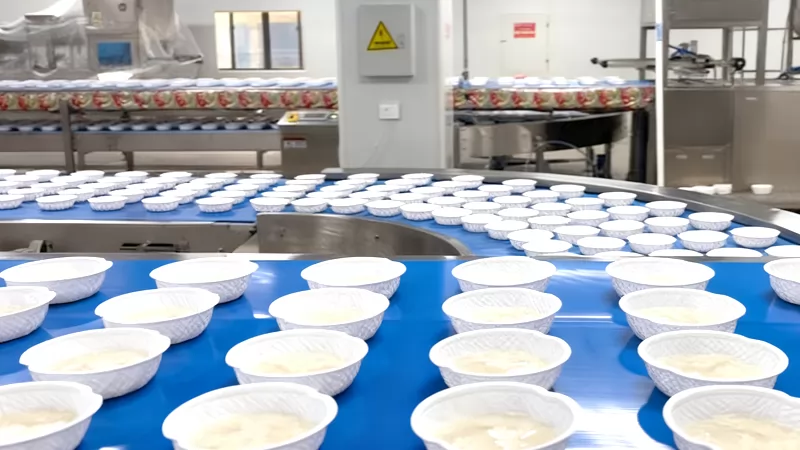
Bowl-shaped containers typically feature larger capacities and wider openings, making them suitable for specific beverage categories and consumption scenarios. Bowl filling and sealing machines also utilize automated controls to execute processes such as bowl dispensing, filling, sealing, and discharge. Typical applications in the beverage industry include:
Ready-to-Eat Soups and Porridges: Liquid or semi-liquid beverages such as "Eight-Treasure Porridge" and breakfast porridges.
Traditional Beverages: Filling and sealing of fermented drinks like sweet fermented rice (jiuniang).
Dessert-style Beverages: Bowl-packaged desserts such as ice cream and pudding.
Bowl packaging is generally targeted at channels like ready-to-eat food services and convenience store fresh-food sections, requiring high standards for seal strength, leak resistance, and heat resistance.
3.3 Tray Packaging: An Emerging Beverage Packaging Format
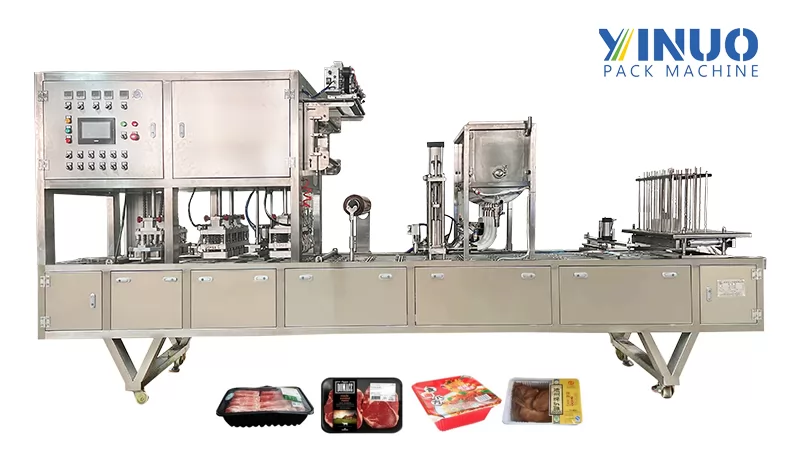
The use of tray sealing machines in the beverage industry has been steadily rising in recent years. Tray packaging typically offers a larger flat surface area for display, making it suitable for multi-cup combination packs or the sealing of uniquely shaped containers. Application scenarios include:
Multi-cup pack configurations: Simultaneous filling and sealing of multiple beverage cups on a single tray to enhance packaging efficiency.
Beverage packaging for ready-to-eat meals: Tray-based packaging for drinks accompanying fast food, bento boxes, and similar meals.
Vacuum and Modified Atmosphere Packaging (MAP): Certain tray sealing machines support vacuum or MAP capabilities, creating a hermetic seal that prevents the ingress of bacteria, moisture, and external contaminants, thereby effectively extending product shelf life.
Tray sealing machines can handle containers made from various materials, such as plastic and paper-plastic composites, and accommodate filling products ranging from liquids and semi-fluids to beverages containing particulates.
The heart of the cup/bowl/tray filling-sealing machine lies in its heat-sealing system. Through independent closed-loop control of temperature, pressure, and dwell time, the machine ensures that the lidding film and container rim fuse uniformly to form a strong, consistent seal. If the sealing temperature is too high, it can reduce the thickness and strength of the seal area; if too low, the film cannot reach a molten state, resulting in an incomplete seal. At the same time, sealing pressure must be adjusted according to the film's properties, width, and thickness – for example, films with textured patterns have a reduced contact area with the container rim and therefore require higher sealing pressure.
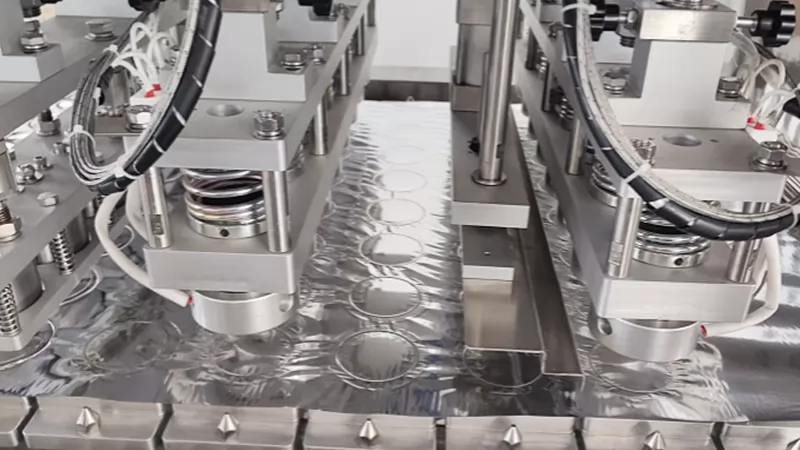
Advanced servo-driven sealing stations guarantee uniform pressure distribution and heat dispersion across all sealing heads, maintaining exceptionally high seal pass rates even at high continuous production speeds. Intelligent constant-temperature control systems, combined with photoelectric tracking devices, automatically correct film pattern alignment with the container rim to ensure precise positioning and aesthetic appearance. In terms of sealing materials, the equipment can handle a variety of roll films, including aluminium foil laminates, PET/PE multi-layer co-extruded films, and biodegradable films, while container materials range from PP, PS, PET, and paper-plastic composites to PLA and other compostable options.
The reason cup/bowl/tray filling-sealing machines are so widely adopted across the beverage industry lies in their exceptional material adaptability. The equipment can handle a broad viscosity range – from low-viscosity to high-viscosity liquid and semi-solid beverages:
Free-flowing drinks: purified water, fruit juices, tea extracts, coffee liquids, etc.;
Medium-viscosity beverages: dairy-based drinks, plant-based protein beverages (soy milk, oat milk), flavoured syrups, etc.;
Products containing particulates: fruit-pulp juices, fruit bowls, teas with coconut jelly/aloe vera grains, eight-ingredient congee, sweet soups, etc.
The equipment is equipped with various filling systems – such as volumetric piston fillers, servo-driven metering pumps, and gravity filling systems – ensuring filling accuracy within ±1%. The filling valve assemblies effectively prevent dripping and stringing, keeping the sealing area clean. The container capacity typically ranges from 50 ml to 1000 ml to accommodate different product packaging requirements.
Regarding opening convenience, the equipment allows programmable easy-peel strength – peelable films for consumer convenience and permanent seals for applications requiring stronger protection. A high-quality seal should not be so strong that consumers struggle to open it, nor so weak that leakage occurs during transport.
In terms of pressure and temperature resistance, the equipment adapts to hot-fill processes (85–95°C) and subsequent pasteurisation, refrigeration, or freezing steps.
Modern filling-sealing machines are generally integrated with PLCs (Programmable Logic Controllers) and touchscreen HMIs, enabling one-touch parameter setting, real-time production monitoring, and automatic fault diagnosis.
The market's growing demand for multi-category, small-batch production requires equipment to quickly switch between different cup sizes and film rolls. Modular design allows rapid changeover of moulds and filling heads to accommodate cups, bowls, and trays of various shapes and capacities – typically completing a product changeover within 60 minutes. The widespread adoption of high-precision servo filling systems ensures accurate filling volumes and ingredient ratios for every cup.
Against the backdrop of carbon peak and carbon neutrality goals, sustainable packaging has become a major trend. Lidding films have evolved from early single-layer plastic films to multi-layer composite structures, and are now gradually shifting toward recyclable mono-material options and bio based sustainable solutions. Equipment must adapt to biodegradable materials (such as PLA films) and environmentally friendly packaging, handling these materials efficiently without sacrificing production speed or seal quality. In addition, energy-saving designs – such as low-power servo systems and efficient heat recovery technologies – are becoming key competitive differentiators for equipment manufacturers.
The beverage industry imposes extremely stringent food safety requirements. Mid-to-high-end equipment commonly uses SUS304 or higher-grade stainless steel, with easy-to-disassemble and clean contact parts. Many machines now come standard with CIP (Clean in Place) systems, minimising the risk of human contamination and complying with GMP (Good Manufacturing Practice) standards. HEPA-filtered positive-pressure air systems in the sealing zone effectively isolate external contamination, meeting aseptic filling requirements.
The industry is undergoing a critical transformation from standalone equipment to intelligent, integrated packaging lines. Modern cup/bowl/tray filling-sealing machines now realise fully continuous operations – from empty container conveying, metered filling, inert gas flushing (e.g., nitrogen) for freshness preservation, precision heat-sealing, coding, to finished product output. Mainstream equipment already features high-speed operation, precision control, automatic format changeover, and is gradually being integrated into industrial internet platforms for remote monitoring and smart maintenance.
Despite significant technological progress, the industry still faces several challenges. The long-term reliability of core components – such as high-end servo motors and precision sensors – still lags behind the world's top levels in some aspects, and stability at ultra high speeds (e.g., over 1,000 cups per minute) requires further improvement. High equipment investment costs, maintenance and technical complexity, and intense competition among suppliers are also major challenges facing the industry.
Looking ahead, the development of cup/bowl/tray filling-sealing machines will increasingly focus on full-chain intelligence (interfacing with upstream cup-making and downstream robotic palletising), green sustainability (adapting to biodegradable materials), and ultimate hygiene and safety. As domestic manufacturers continue to improve in precision, stability, and intelligence, the process of import substitution is accelerating. The promotion of energy-saving and environmentally friendly equipment, the growing demand for plant based and functional food packaging lines, and the need for flexible production lines capable of handling multiple cup types and products will all be important business opportunities in the future.
The cup/bowl/tray filling-sealing machine provides beverage companies with an integrated solution from filling to sealing. It is not only a guarantor of production efficiency but also a "gatekeeper" of product quality and safety. From a cup of yogurt to juice, from a bowl of sweet soup to a cup of functional beverage – every drink presented to consumers in cup, bowl, or tray format embodies the technological accumulation of filling-sealing equipment in heat-sealing precision, hygiene assurance, and intelligent control. With the deepening of the three major trends – intelligence, flexibility, and green development – this seemingly niche equipment sector will continue to leverage China's vast consumer market and complete industrial chain, undergoing a profound transformation from "manufacturing" to "smart manufacturing" through the dual drivers of technological innovation and service upgrading. Whether it is a refreshing drink for daily consumption or an innovative new product with distinctive particulate textures, the cup/bowl/tray filling-sealing machine will, with stable, precise, and efficient technical capabilities, help every cup, bowl, and tray reach consumers perfectly and win market trust.
Your Name*
Your Email*


*We respect your confidentiality and all information are protected.